
Mini Excavator or Skid Steer? How to Pick the Right Machine for Your Indianapolis Job
August 14, 2026 · mike@rinorents.com
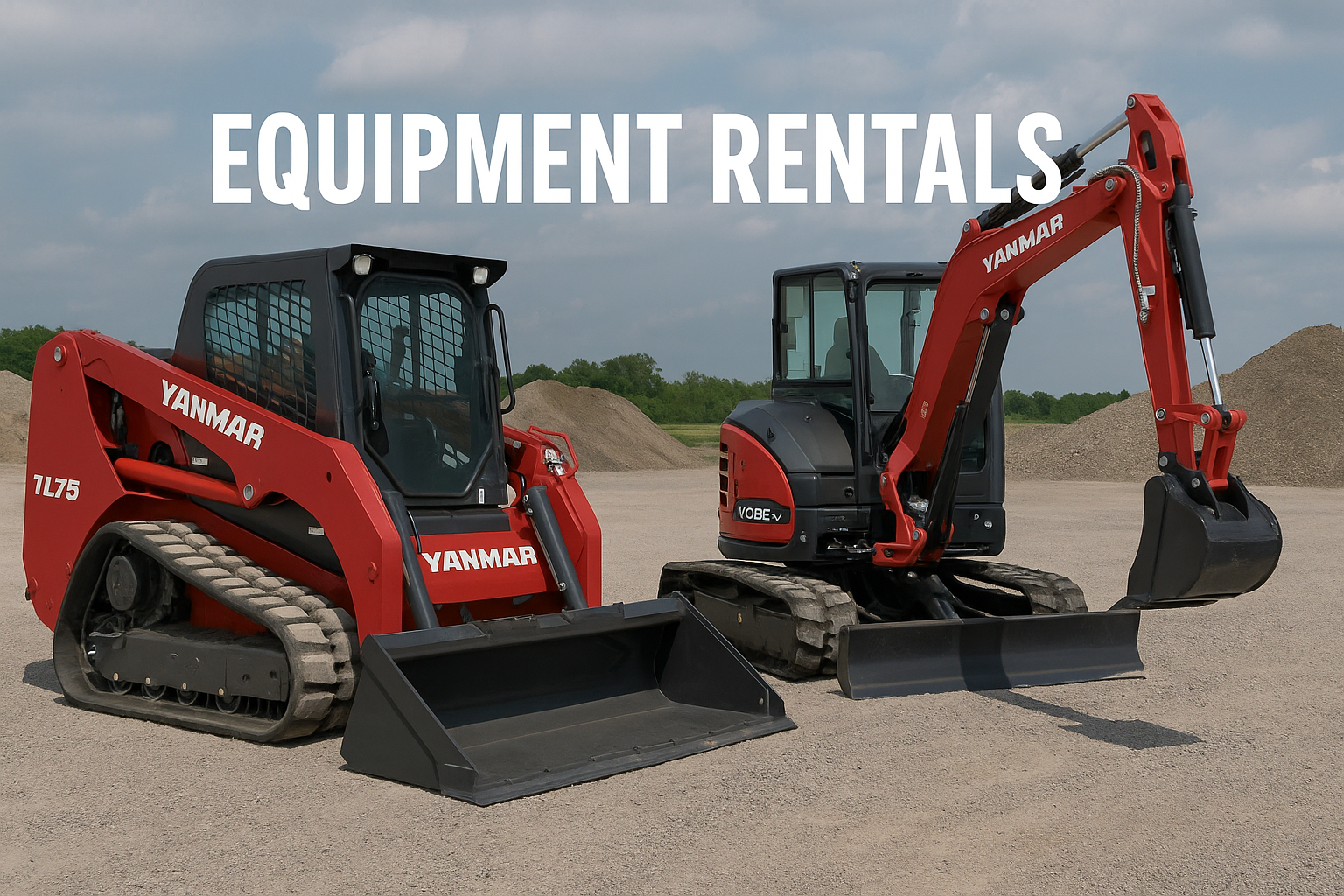
If you've never rented heavy equipment before, the fleet page can feel like a menu with no descriptions. Mini excavator, skid steer, compact track loader — they all dig, push, and move dirt, so how do you know which one you actually need?
Here's the short version: excavators dig, skid steers and track loaders move. But the real answer depends on your site, your soil, and what "done" looks like at the end of the day. Here's how to think it through before you call the yard.
Mini Excavators: When the Job Is Below Grade
A mini excavator is your pick any time the work happens below the surface — digging down rather than pushing across.
Reach for one when you're:
Digging a trench for a French drain, footer, or utility line Removing a tree stump or root ball Digging post holes or a footing for a deck or fence Demoing a small structure like a shed slab or old patio Working in a tight backyard — Indianapolis lots often have narrow side-yard access, and a mini excavator with a retractable undercarriage can slip through a standard gate that a full-size machine never will
The other advantage: precision. A mini excavator's boom and bucket let you dig a clean 18-inch trench next to a fence line or foundation without tearing up everything around it — something a loader simply can't do.
Skid Steers & Compact Track Loaders: When the Job Is Above Grade
Skid steers and track loaders are built to move material across the surface — grading, spreading, hauling, pushing.
Reach for one when you're:
Grading or leveling a yard, driveway, or pad before pouring concrete or laying sod Spreading gravel, mulch, or topsoil Clearing brush or debris from a lot Loading a dumpster or trailer with material Running attachments — a pallet fork, auger, or trencher turns a skid steer into three different tools without three different rentals
Skid steer vs. track loader, quickly: skid steers run on wheels and do fine on driveways, gravel, and firm ground. Track loaders run on rubber tracks, which spread the machine's weight out — better traction and less ground damage on wet grass, mud, or a soft backyard, which covers a lot of Central Indiana in spring and after a heavy rain.
When You Need Both
A lot of real jobs use both machines back to back. A typical patio or landscaping project might look like:
Excavator digs out and levels the base Track loader hauls in and spreads gravel or fill Excavator comes back for final grading and edge work
If that's your project, don't rent two separate times — call once and get both dates locked in together. It's one delivery trip either way, and having the right machine on-site for each phase saves you from forcing one machine to do a job it wasn't built for (which is how gates get clipped and yards get torn up).
Still Not Sure? That's What the Phone Call Is For
Machine specs only tell half the story — soil type, gate width, ground conditions, and what you're trying to accomplish all matter more than a spec sheet. That's exactly why we don't make you self-serve through a 14-step equipment picker.
Call or text the yard, tell us about the job, and we'll tell you straight which machine actually fits — not the most expensive one on the lot. If it turns out you need both, we'll get them scheduled together so your project doesn't stall waiting on equipment.
Talk to a human: (317) 868-4993
We deliver fueled and walked-around, and most reservations leave the yard the next morning — so once you know what you need, you're usually digging within 24 hours.
RINO Rents is a family-operated equipment rental yard on the west side of Indianapolis, serving contractors and DIYers across Central Indiana with mini excavators, skid steers, track loaders, and attachments — delivered to your jobsite.